18.12.2025 | 6 min read
World Wellbeing Policy Forum 2025
Insights from the second annual gathering of distinguished academics, policymakers, and leaders dedicated to improving wellbeing at scale.Charlotte Day
For World Mental Health Day 2025 the World Wellbeing Movement were at the World Wellbeing Policy Forum in Gallup’s London HQ – organised by the WOHASU® Wellbeing Foundation, with knowledge partners Gallup and the World Wellbeing Movement.
Following the success of the inaugural Forum at The London School of Economics and Political Science (LSE) in 2024, this important event continues to bring leaders in the public and private sector together to collaborate on our shared vision for a world where wellbeing comes first.
As proud knowledge partners, we were honoured to host a discussion on the importance of taking a cross-party approach to embed wellbeing in public policy with WWM Board members Prof Lord Richard Layard and Lord Gus O’Donnell, as well as former MP and founder of the UK’s APPG for Wellbeing Economics, Jo Swinson.
WOHASU® founder and CEO, and valued WWM Board member, Karen Guggenheim began the mornings discussion with an opening address to attendees, recognising the progress made since the last Forum.
What the world could evolve into, the goal of society, should be wellbeing.
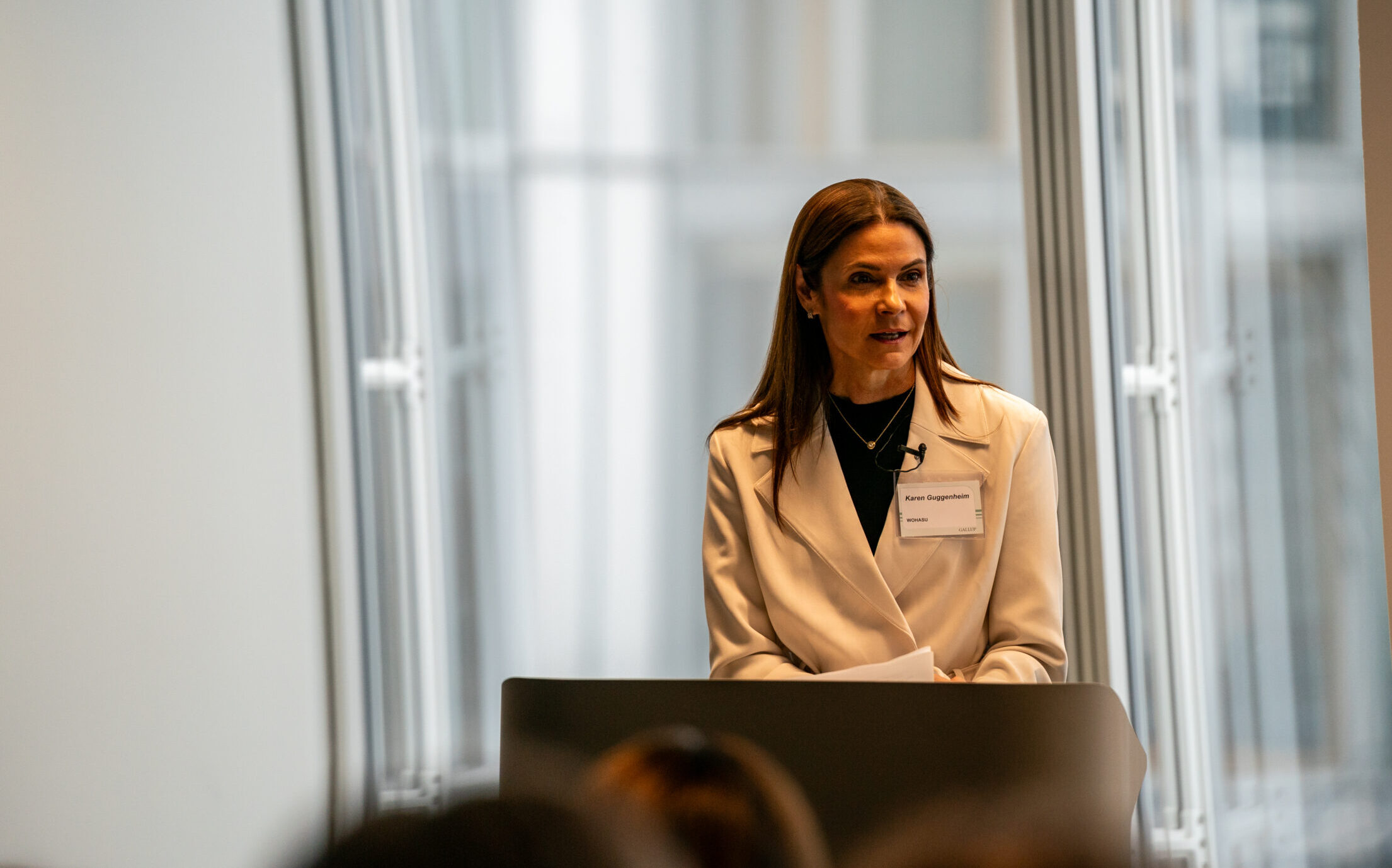 Karen Guggenheim opening the 2025 World Wellbeing Policy Forum at the Gallup London Headquarters.
The first discussion was between Jim Clifton, Chairman of Gallup and Jeremie Brecheisen, the Managing Partner of Gallup’s EMEA Division. They discussed the role of measuring wellbeing in business, society, and education. Jim emphasised the importance of measuring wellbeing globally, explaining “We ought to have thriving right next to GDP. As soon as that’s right next to GDP, we’ll manage the whole world better”.
Currently, we don’t have the right measures to run the world. Jim refers to the missing ’emotional economy’: a well-measured, reported and prioritised indicator of how people on earth are feeling.
Whilst Gallup have been collecting happiness data for many years, with the World Happiness Report publishing a high-quality analysis by world-leading researchers since 2012, wellbeing remains widely ignored in top-level decision-making.
As soon as thriving is right next to GDP, we’ll manage the whole world better.
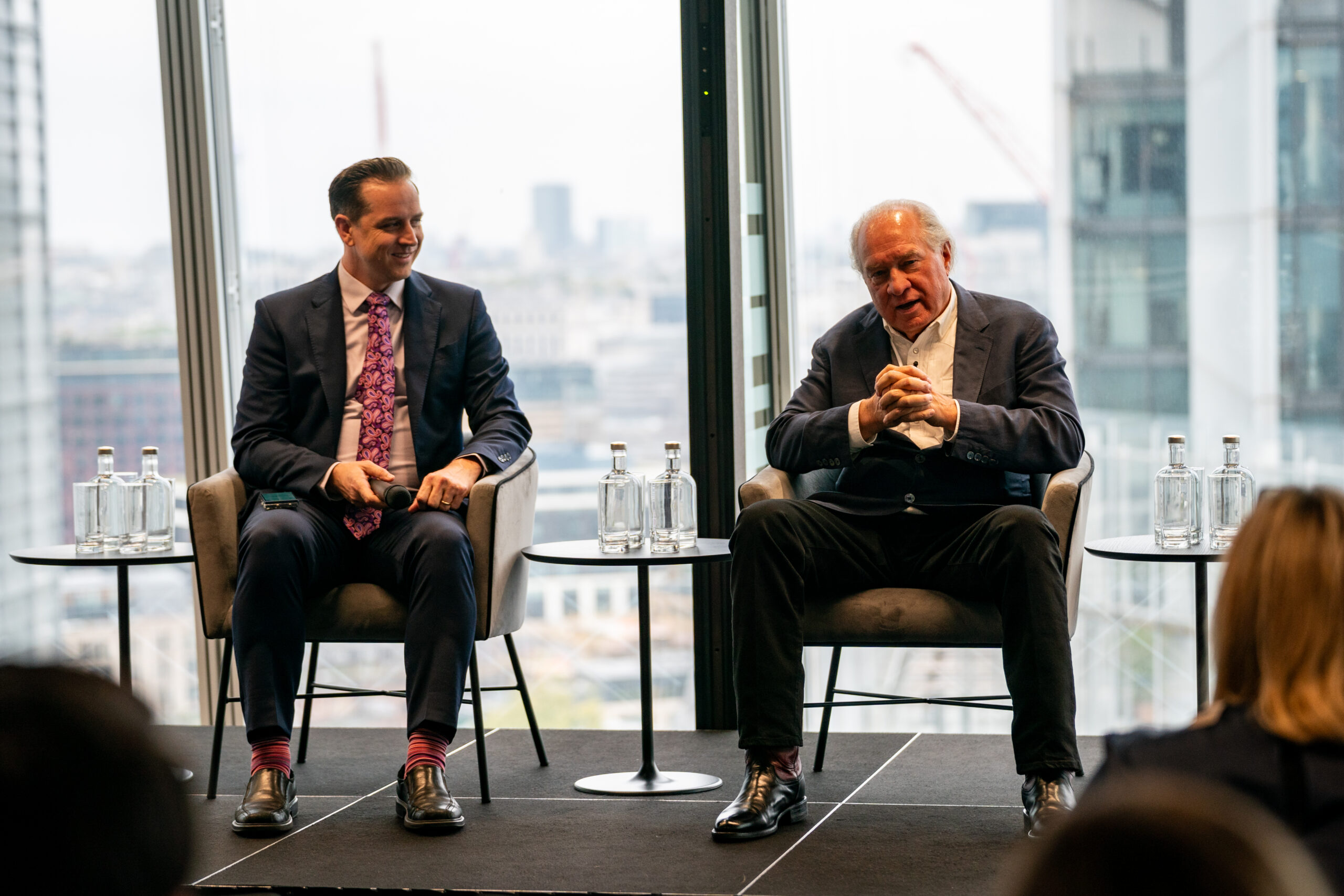
Jim Clifton and Jeremie Brecheisen discussed the need to measure wellbeing at the World Wellbeing Policy Forum 2025.
The next conversation shifted focus onto the role of policy. This panel, moderated by our Managing Director, Sarah Cunningham, saw British politicians from across the political spectrum outline a vision for placing wellbeing at the heart of political decision making.
Lord Richard Layard (Labour), Lord Gus O’Donnell (Former UK Cabinet Secretary and Head of the Civil Service, Cross-Bench) and Jo Swinson (Former Leader of the Liberal Democrats) shared their view on the best approach to making wellbeing central to government policy, both in the United Kingdom and globally.
The panel spoke to the power of wellbeing as a cross-party unifier, acknowledging the important role that the newly-revived All-Party Parliamentary Group on Wellbeing Economics will play in this. In a politically turbulent time, wellbeing is an issue that people broadly agree on. Everyone wants a better and happier future for themselves, and for their children.
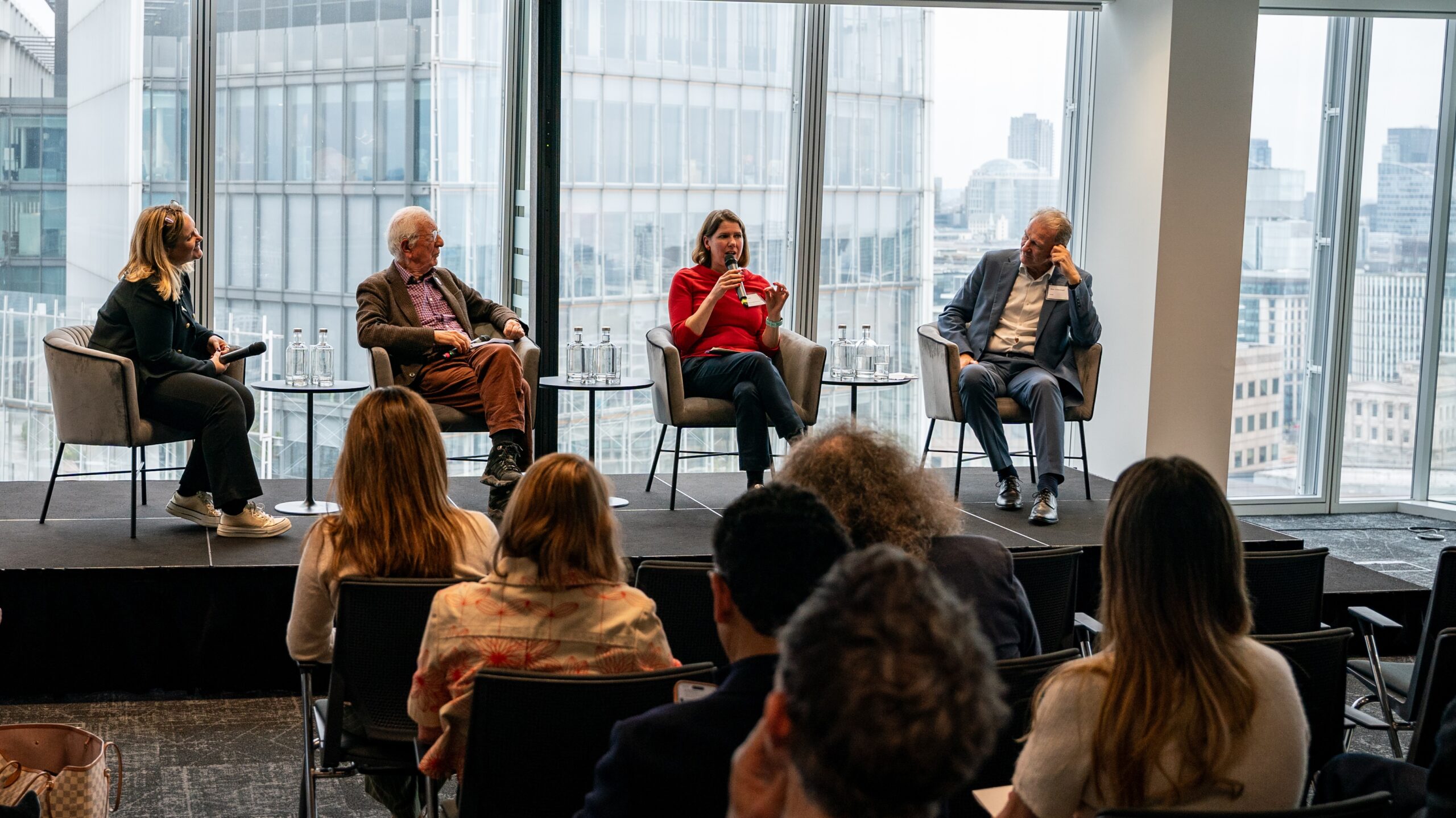
The Role of Politics conversation at the World Wellbeing Policy Forum 2025. Pictured on stage: Sarah Cunningham, Prof Lord Richard Layard, Jo Swinson, and Lord Gus O’Donnell.
It is a very, very polarised political situation at the moment, in very many countries. At least wellbeing is something that people can agree on.
Next up was an important conversation with the private sector.
Anna Borg, Head of Psychosocial Health and Wellbeing at Siemens, and Nancy Hey, Director of Evidence and Insight at Lloyd’s Register Foundation, spoke with Karen Guggenheim about the many ways in which the private sector can partner with the public sector to drive systemic change for employee wellbeing.
Anna and Nancy both shared stories from their own careers to highlight successes, as well as methods that are best avoided. As Nancy shared, it is important to be intentional with any change, as change can challenge people’s sense of belonging if not introduced thoughtfully. Anna explained how important it is to get company-wide buy-in if you are to genuinely transform an organisation’s approach to wellbeing. And beyond the private sector, you need society at large to share the same goal.
You need a village to raise a child, and to raise wellbeing you need the whole company.
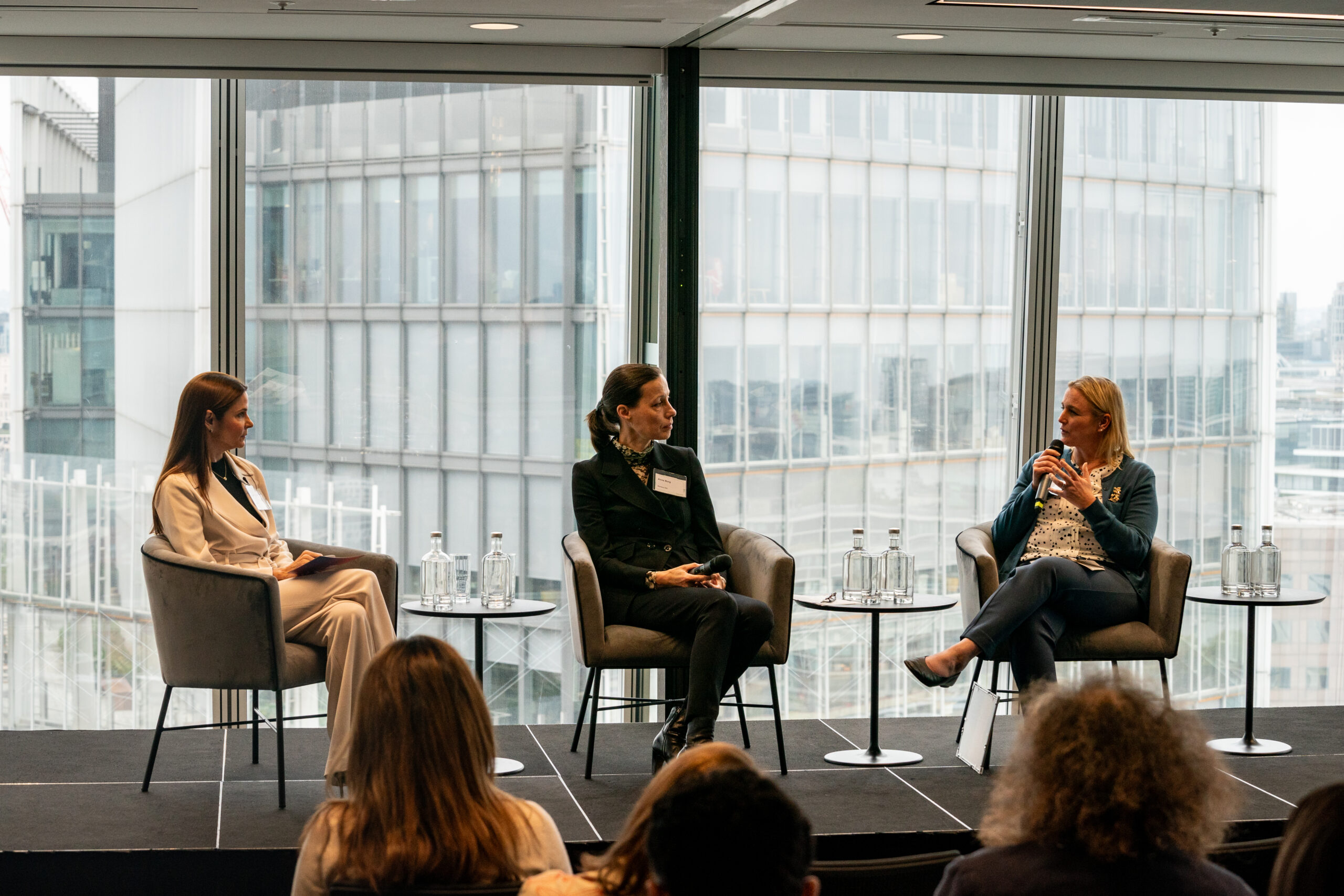
Karen Guggenheim, Anna Borg and Nancy Hey in conversation on stage at the World Wellbeing Policy Forum 2025.
The morning closed with a panel on the Role of Education, featuring Dr. Jose Dotres, Superintendent of Miami-Dade County Public Schools, Karen Guggenheim and Gallup’s Managing Director, Ilana Ron Levey.
Dr. Dotres shared the impressive steps they’ve taken in Miami, by partnering with the WOHASU® Wellbeing Foundation, to support the wellbeing of school children and teachers in the district. They were rightly concerned about declining youth mental health levels in the United States and wanted to provide support through leadership training to create a happier, more resilient school community.
Our State really began to provide opportunities for us to invest in the mental health approaches and strategies to help our kids.
This investment allowed leadership teams in schools across the District, the third largest in the US, to step up and prioritise wellbeing. Interestingly, it didn’t take long before they saw the benefits of this support extend beyond the leaders, to the teachers and students, and beyond to families and their communities.
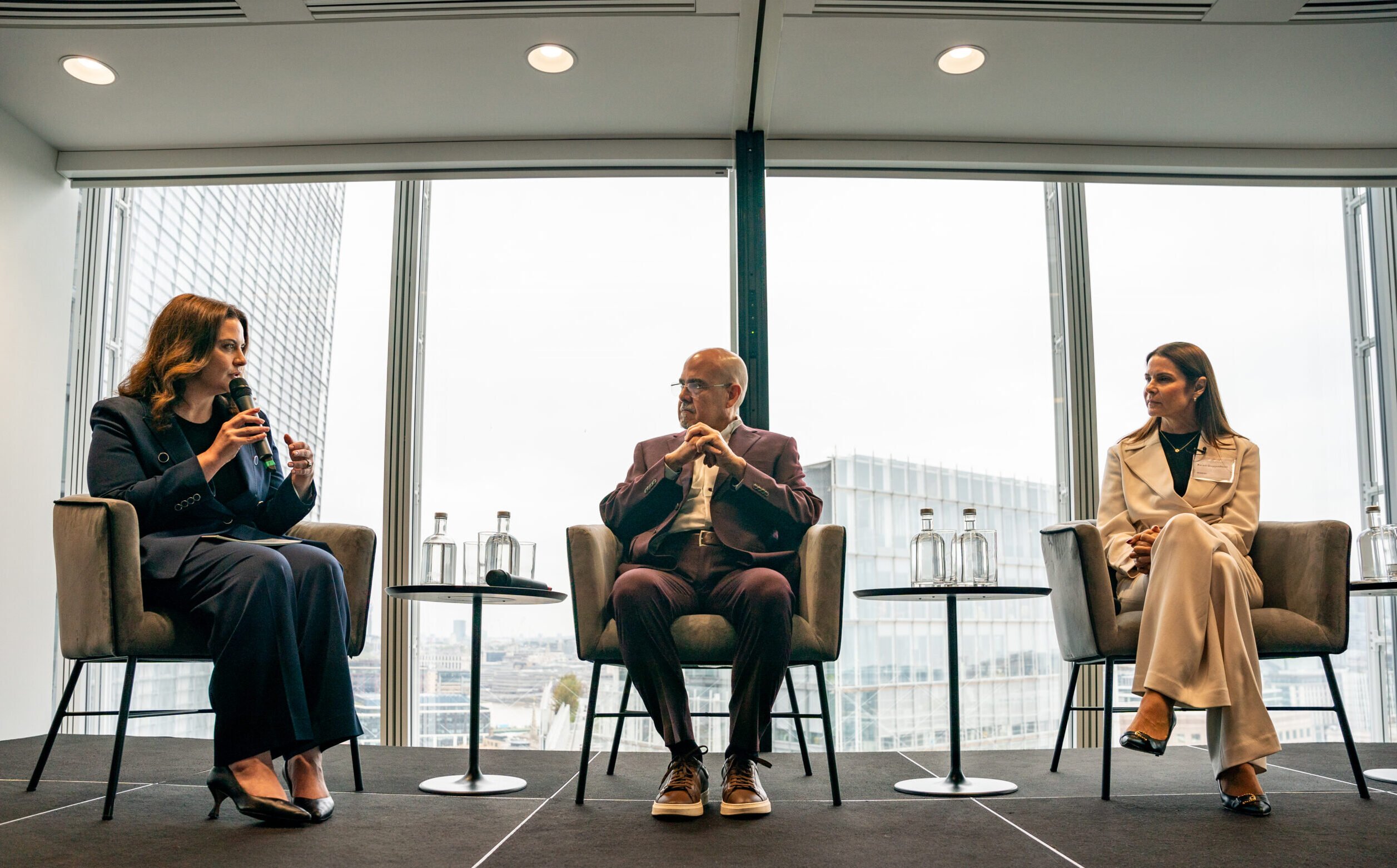
Ilana Ron Levey, Dr. Jose Dotres and Karen Guggenheim on stage at the World Wellbeing Policy Forum 2025.
The panellists also emphasised the importance of measurement within the school setting: “As we build our strategic plans, one of the measures, one of the objectives, is going to be the wellbeing of our teachers and the wellbeing of students, so that we can measure the wellbeing of an organisation”.
The most precious thing we have is our time and attention.
Karen reflected on what makes us human, and the importance of bringing these unique qualities back into the centre of society. She shared the idea that, “The most precious thing we have is our time and attention”, which the science shows are “basic things with amazing impacts”. She called for us to rediscover these elements that have been lost in the process of society advancing exponentially, and prioritise them properly.
To watch the conversations from the day, simply click on the corresponding images above, or view the whole playlist by clicking the button below!
You can also explore the insights from the 2024 Forum here.